

What if the best way to experience Al Fahidi is to slow down and read its streets, not just stop for a photo? The al fahidi historical neighbourhood reveals more as you wander: narrow lanes, shaded courtyards and details that reflect Old Dubai’s built character. Its roots reach back to the late 19th century, giving this corner of Bur Dubai a distinct feel from the city’s newer districts.
This guide explains what makes Al Fahidi distinctive, what to look for as you explore and how to fit a visit into a well-paced Dubai itinerary. You’ll find practical tips for noticing the neighbourhood’s architecture, checking individual museums and galleries, and considering nearby experiences along Dubai Creek. Whether you’re staying in Dubai Marina, Al Barsha, Dubai Downtown, Dubai JVC or Dubai Production City, check your route and travel arrangements before setting out.
Key Takeaways
- Get oriented to the al fahidi historical neighbourhood in Bur Dubai and learn why it stands apart from newer parts of the city.
- Use the lanes, building exteriors and wind-tower forms as clues to notice more than you might on a quick photo stop.
- Plan a relaxed visit by checking current access and confirming opening arrangements for any individual venue you hope to visit.
- See how Al Fahidi might fit into a wider Dubai itinerary, and what to check before pairing it with other stops.
What Is Al Fahidi Historical Neighbourhood, and Why Visit?
Al Fahidi Historical Neighbourhood is a heritage district in Bur Dubai, near Dubai Creek, known for its narrow lanes and traditional buildings. It is an area to explore on foot rather than a single indoor attraction. Take in the streetscape, pause to notice the building details and compare this historic setting with the newer parts of Dubai.
The district is also known as Al Bastakiya. Historical accounts connect that name to merchants from Bastak, in Persia, who settled in the area in the late 19th century. For an overview of its naming and preservation, see Al Fahidi Historical Neighbourhood history. Use this background as context for your walk, then look closely at the layout and architecture to get a sense of the neighbourhood’s character.
Where is Al Fahidi Historical Neighbourhood in Dubai?
Al Fahidi is in Bur Dubai, beside the historic Dubai Creek area. Use the creek as a point of orientation, then check a current map to confirm where you want to start and how to reach the district. The al fahidi historical neighbourhood is best approached as a walk through a historic setting, rather than a visit to one landmark building.
What makes the neighbourhood feel different from modern Dubai?
Narrow lanes and traditional-looking façades create a more intimate street scene than the broad roads and contemporary towers found elsewhere in Dubai. Look up for barjeels, or wind towers, a distinctive feature of the area’s architecture. Designed to catch breezes and help cool buildings, they show how homes responded to the local climate before modern cooling systems. Notice how the towers and other architectural details shape the streetscape, not just the skyline.
What to Notice in Al Fahidi’s Lanes and Traditional Architecture
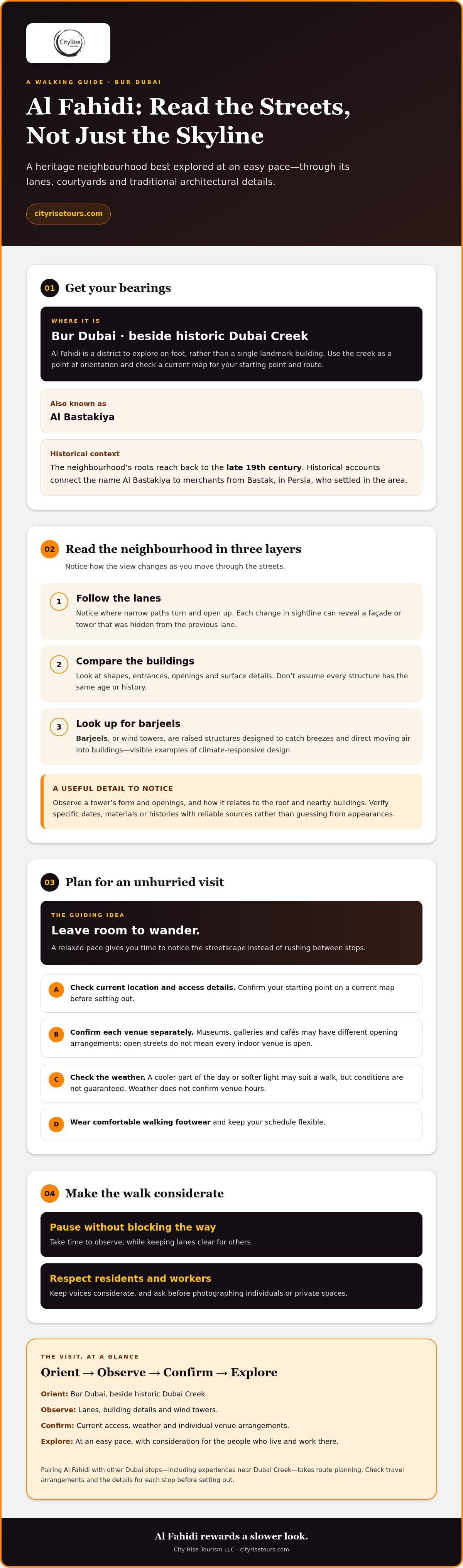
Explore in layers. First, notice how the narrow lanes turn and open up, changing what you can see ahead. Then compare the buildings’ shapes, entrances, openings and surface details rather than assuming every structure shares the same age or history. Museums, galleries and cafés may also be part of the neighbourhood, but check which venues currently operate and confirm their opening arrangements before planning a stop. Visit Dubai’s visitor's guide to Al Fahidi can help you identify visitor features to look into.
How to read the wind towers and building details
Look above roof level for barjeels, or wind towers. A wind tower is a raised architectural structure designed to catch breezes and direct moving air into a building, offering a visible example of climate-responsive design. Notice its form, openings and relationship to the roof and nearby buildings. Avoid assigning a date, material or specific history to an individual structure unless a reliable source confirms it.
Why the lanes reward a slower walk
The changing sightlines make the walk more than a route between attractions. A turn may reveal a façade or tower that wasn’t visible from the previous lane. Pause where you can do so without blocking the way. The al fahidi historical neighbourhood is also a place where people live and work, so keep voices considerate and ask before photographing individuals or private spaces. Treat historical dates and architectural interpretations with the same care: verify them with reliable references instead of relying on appearances alone.
Want to connect the heritage walk with other Dubai experiences? Browse things to do in Dubai as you shape the rest of your itinerary.
How to Plan a Visit to Al Fahidi Historical Neighbourhood
A little preparation can make your visit more relaxed. Confirm current access and location details for the al fahidi historical neighbourhood, check the weather, and decide which venues you hope to enter. Leave room to explore at an easy pace instead of trying to fit every stop into a tight schedule.
When should you visit Al Fahidi?
Consider a cooler part of the day or a time with softer light for a more comfortable walk, but treat these as options, not guarantees. Check the current weather before setting out. Outdoor conditions won’t tell you whether a museum, gallery or café is open, so check the venue’s own visitor information if a particular stop matters to your visit.
What should visitors check before setting out?
Confirm the neighbourhood’s location on a current map, then check access arrangements and opening details for each place you hope to enter. Venue schedules can differ, so don’t assume that open streets mean every indoor attraction is open too. Comfortable walking footwear can make exploring easier, and considerate behaviour helps keep the visit pleasant for others.
- Check: Current location and access details.
- Confirm: Opening arrangements for each museum, gallery or café separately.
- Allow: Flexible time to walk without rushing between stops.
If you’re planning more stops around the city, browse a guide to Dubai sightseeing and attractions, then build a route around your interests. A wider Dubai City Tour may be one way to connect neighbourhood visits with other experiences. City Rise Tourism’s INBOUND TOURS & SAFARIS includes a Dubai City Tour; check the itinerary and logistics to decide whether it suits your plans.
How to Include Al Fahidi in a Wider Dubai Itinerary
Make the al fahidi historical neighbourhood one part of your Dubai plan, then choose other stops according to your interests and available time. Before pairing it with another attraction, check opening arrangements and travel logistics for both places. If you’re starting from Dubai Marina, Al Barsha, Dubai Downtown, Dubai JVC or Dubai Production City, check your route in advance rather than assuming how long the journey will take. These simple checks can help you avoid a rushed day or an unexpected gap between plans.
Should you explore independently or with a guided tour?
Exploring independently gives you flexibility to pause, wander and set your own pace. A guided experience can add context to places you might otherwise pass without understanding, but check the tour’s focus and itinerary before booking. City Rise Tourism’s INBOUND TOURS & SAFARIS includes a Dubai City Tour and may be worth considering for a broader visit. Confirm directly whether a specific itinerary suits your interests; this does not assume an Al Fahidi-specific tour.
Where can Al Fahidi fit into a Dubai sightseeing plan?
Start by deciding what kind of day you want. Keep the heritage visit as the main focus, or consider other interests after checking locations, schedules and transport arrangements. Use a current map to plan the sequence and allow flexibility between stops instead of relying on assumed distances or travel times. A Dubai sightseeing tours guide can help you compare options and build a route that works for your plans.
For a wider shortlist, browse things to do in Dubai. Choose a manageable number of stops, verify details before setting out, and leave space to enjoy each place at your own pace.
Make Old Dubai Part of Your Dubai Story
The al fahidi historical neighbourhood rewards a slower visit. Explore its lanes on foot, look closely at the traditional building forms and wind towers, and treat the district as a living place rather than a quick photo stop. Before you go, check current access and confirm opening arrangements for any museum, gallery or café you plan to visit.
For a wider Dubai itinerary, pair the heritage walk with other experiences only after checking locations and travel logistics. City Rise Tourism is a Dubai-based tour operator with local knowledge of the UAE. Its INBOUND TOURS & SAFARIS includes a Dubai City Tour, which may be relevant if you’re considering how to connect different city experiences. Review the itinerary and choose a pace that leaves room to enjoy each stop.
Keep planning at your own pace, and let curiosity guide your walk through Old Dubai.
With a little preparation, you’ll be ready to make the most of this distinctive corner of the city.
Frequently Asked Questions
What is Al Fahidi Historical Neighbourhood known for?
Al Fahidi Historical Neighbourhood is known for its heritage architecture and winding lanes in Bur Dubai. Look for traditional wind towers, called barjeels, which were designed to catch breezes and help cool buildings. The district’s roots date to the late 19th century, offering a glimpse of an earlier chapter of Dubai’s development. Take time to notice how the lanes and buildings shape the area’s character.
Is Al Fahidi Historical Neighbourhood the same as Al Bastakiya?
Yes, Al Bastakiya is another name commonly used for Al Fahidi Historical Neighbourhood. The name refers to Bastak, in Persia, and is connected with merchants who settled in the area. You may see both names in travel guides and maps. If you’re researching the neighbourhood’s history, check reliable references, as naming and preservation details can be presented differently across sources.
How long should I spend in Al Fahidi Historical Neighbourhood?
There’s no set visit duration. The time you need depends on whether you’re walking through the lanes or also planning to enter museums, galleries or cafés. For a relaxed visit, allow time to explore without rushing and check the opening arrangements of any venues you want to see. If you’re pairing Al Fahidi with other Dubai stops, confirm travel logistics before setting your schedule.
What can you see in Al Fahidi Historical Neighbourhood?
You can explore narrow lanes, traditional-looking building exteriors and distinctive wind towers. Museums, galleries and cafés may also be found in the neighbourhood, though individual venues can change or have separate access arrangements. Check what’s currently open before setting out. As you walk, look at the relationship between the towers, rooflines and lanes to appreciate the area beyond a quick photo stop.
Are opening hours for Al Fahidi Historical Neighbourhood the same every day?
Don’t assume that the neighbourhood’s streets and its individual venues follow the same schedule. Museums, galleries and cafés set their own visitor arrangements, which may differ by day or change over time. Before travelling, confirm the current details for each place you plan to enter. Checking venue information separately helps you avoid arriving when a specific stop is closed or unavailable.


