
Educational tours of the UAE can take students from Dubai’s historic Al Fahidi Fort to the Burj Khalifa, conservation areas and Abu Dhabi’s Sheikh Zayed Grand Mosque. These visits connect history, architecture, sustainability and wildlife with classroom subjects.
Choosing destinations is only one part of the plan. You also need to fit visits and learning activities around accommodation, meals, guides and transport, while keeping the schedule manageable for the group.
This guide covers student-friendly destinations in Dubai and Abu Dhabi, what students can learn at each, and how to connect visits in a practical itinerary. It also outlines key planning details, from arrival through departure.
Key Takeaways
- Build cultural learning around the UAE’s UNESCO World Heritage locations, Emirati food traditions and Dubai’s international community.
- Plan the itinerary as one connected schedule, bringing accommodation, meals, guides and transport together; September through April offers more comfortable conditions for school trips.
- Link visits and academic workshops to students’ curriculum, so each activity has a clear learning purpose.
- Compare Dubai and Abu Dhabi attractions by subject, from heritage and architecture to renewable energy and conservation.
Cultural learning and global citizenship
Educational tours of the UAE can combine heritage visits, cultural activities, local meals and classroom-linked learning. Students might explore historic districts, learn about local traditions and compare life in Dubai with other emirates.
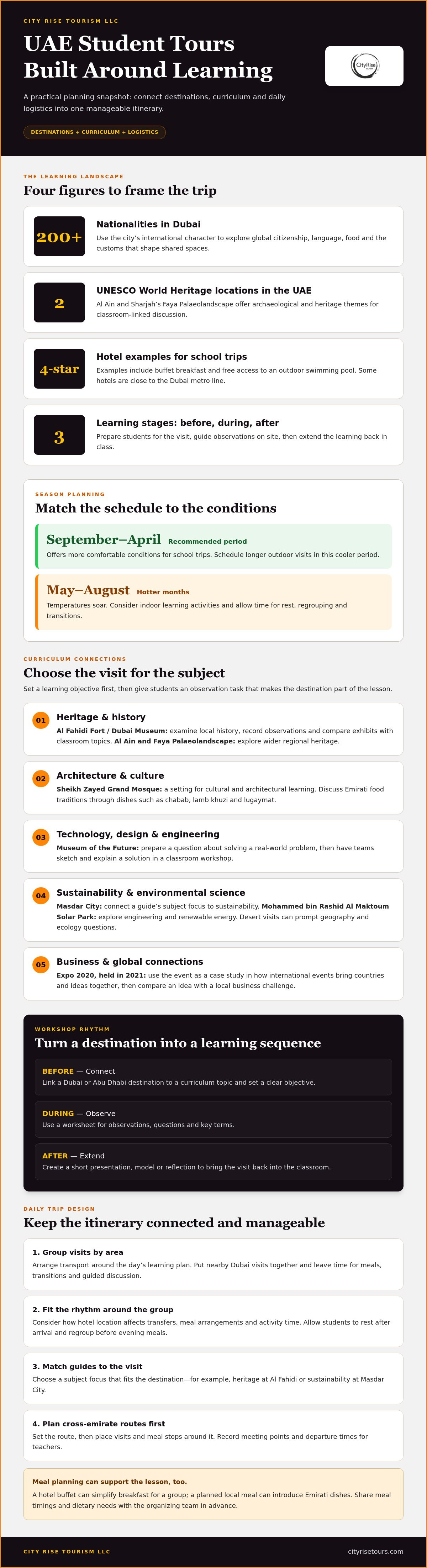
Dubai’s international character offers a practical global citizenship lesson: the city accommodates more than 200 nationalities. Arabic is the UAE’s official language, while English is the most commonly spoken. Ask students to notice how language, food and everyday customs shape shared spaces. For a local-host meal, chabab, lamb khuzi and lugaymat offer examples of Emirati food to discuss respectfully.
Historical and cultural visits can connect Dubai’s past with the region’s wider heritage. The UAE has two UNESCO World Heritage locations: Al Ain and Sharjah’s Faya Palaeolandscape. At Dubai Museum in Al Fahidi Fort, students can examine local history, record observations and compare exhibits with classroom topics before discussing how heritage is preserved.
Dubai, Abu Dhabi and other emirates offer distinct learning settings. Dubai brings together urban diversity and heritage; Abu Dhabi features sites such as Sheikh Zayed Grand Mosque and Masdar City. Al Ain and Sharjah add archaeological and palaeolandscape themes. Choose destinations according to learning objectives, travel time and students’ ages.
Japan ski and cultural trips are international itineraries, not part of a UAE tour. Keep the destinations distinct when comparing programs: a UAE trip can focus on Emirati culture and regional heritage, while a Japan itinerary centers on its own cultural and winter activities.
Use a checklist for permits, approvals and insurance, rather than assuming one rule applies to every trip. Obtain school leadership approval, arrange parent consent and review the requirements for the destinations and activities. Insurance arrangements depend on school policy and trip details.
Per-student costs depend on the itinerary, accommodation, meals, transport, admissions and workshops. The price is determined after a quote request, based on the trip choices and group arrangements.
Travel logistics, accommodation, meals, guides, and transport
A well-planned school itinerary connects visits without rushing students. Group destinations by area, then arrange transport around the day’s learning plan. For example, schedule nearby Dubai visits together and leave time for meals, transitions and guided discussion. A clear sequence makes group management easier and keeps the day’s details visible.
Accommodation sets the rhythm for mornings and evenings. Dubai school-trip examples include 4-star hotels, typically with buffet breakfast and free access to an outdoor swimming pool. Some are close to the Dubai metro line, which provides access to shopping malls. Consider how location affects daily transfers, meal arrangements and time available for activities before choosing a hotel style.
Season affects outdoor schedules. September through April is recommended for more comfortable school-trip conditions; temperatures soar between May and August. Plan longer outdoor visits in the cooler period and consider indoor learning activities during hotter months. Allow time for students to rest after arrival and regroup before evening meals.
Keep dining practical while making room for cultural learning. A hotel buffet can simplify breakfast for a group, while a planned local meal can introduce Emirati dishes such as chabab or lugaymat. Share meal timings and dietary needs with the organizing team in advance. A clear meal plan helps protect visit times and gives students space to discuss their experiences.
Guides and transport shape how smoothly each day runs. Match a guide’s subject focus to the visit, such as heritage for Al Fahidi or sustainability for Masdar City. Build the itinerary around realistic travel connections, with meeting points and departure times recorded for teachers. For cross-emirate days, plan the route first, then place visits and meal stops around it. This makes an unforgettable trip more manageable and leaves room for creative learning without overcrowding the day.
Curriculum-aligned visits and academic workshops
UAE educational visits can suit primary and secondary students when activities match their classroom experience. History, geography, science, engineering, business and sustainability all offer practical connections. Set a learning objective before choosing a destination, then give students a short observation task for the visit.
At Dubai’s Museum of the Future, teachers can focus a visit on future technology, design and engineering. Before entering, students could write a question about how people might solve a real-world problem. Afterwards, a classroom workshop can ask teams to sketch a solution and explain their choices. This makes the visit an academic exercise, not just sightseeing.
Business and entrepreneurship themes can connect to Dubai’s role as a global commercial centre. Use Expo 2020, held in 2021, as a case study in how international events bring countries and ideas together. Students can compare a presented idea with a local business challenge, then pitch a simple response in class. Keep the task focused on research, teamwork and communication.
Industry visits can introduce career pathways without promising access to specific workplaces. Build a lesson around sectors and related skills, such as engineering and renewable energy at Mohammed bin Rashid Al Maktoum Solar Park, or environmental science in the desert. Ask students to list relevant roles, tools and questions, then discuss how those skills apply beyond the destination.
Workshops are most effective when they prepare students for visits and extend learning afterwards. A practical sequence is simple:
- Before: connect a Dubai or Abu Dhabi destination to a curriculum topic.
- During: use a worksheet for observations, questions and key terms.
- After: create a short presentation, model or reflection.
For example, a desert visit can prompt questions about geography and ecology, while an engineering task can explore how design addresses environmental needs. Adjust vocabulary, research depth and workshop format to the class’s age and subject goals.
Educational tour attractions
A strong school trip pairs each attraction with a clear learning question. In Dubai, the Burj Khalifa rises 828 meters, giving students a case study in architecture, engineering and urban development. The school visit observation deck is on level 124 or level 125. Ask students to note how the view helps explain Dubai’s layout and growth.
For conservation learning, compare the Dubai Desert Conservation Reserve with Ras al Khor Wildlife Sanctuary. Both offer conservation education tours focused on habitat protection and wildlife. Students can record observations and discuss how environmental pressures differ between a desert reserve and a wetland. This creates a field-based learning activity rather than a general sightseeing stop.
Abu Dhabi offers a distinct cultural destination. A school-group excursion includes entry to Sheikh Zayed Grand Mosque, where students can study design, place and religious architecture. Pair the visit with other Abu Dhabi stops, while leaving enough time for explanation and reflection. It offers a different perspective from Dubai’s urban landmarks.
For a shorter Dubai outing, a half-day guided city tour can introduce students to the city’s main areas and changing character. A half-day desert safari offers a contrasting setting and an element of adventure. Choose according to the subject: urban geography and development for the city, or desert landscapes and conservation for the safari.
Which UAE tour operators offer educational trips for schools and universities? Operators that arrange school and university itineraries can bring guided visits and learning activities together. Compare options by their destinations, academic focus and practical schedules.
Use a simple selection process: choose the subject, match it to an attraction, then decide how long to spend there. Dubai suits city and conservation themes; Abu Dhabi adds landmark architecture and cultural learning. These contrasts can shape an itinerary across the United Arab Emirates.
City Rise Tourism: Activities across UAE
City Rise Tourism organizes engaging activities and helps travelers discover Dubai attractions. For schools planning an itinerary around heritage, city life or cultural sites, these experiences offer a practical starting point for matching destinations to the group’s interests during educational tours of the UAE.
Choose activities according to the subjects students are studying and the places you want to visit. Dubai attractions can complement a city-focused itinerary, while customized local experiences extend the trip with diverse learning opportunities. Once you have a theme in mind, use it to identify relevant experiences.
Shape the next step for your school group
Turn your learning goals into a clear trip brief. Identify the subjects students should explore, the experiences that bring those topics to life and a pace that suits the group. With these priorities set, educational tours of the UAE can extend classroom learning rather than become a schedule of disconnected stops.
City Rise Tourism offers activities across the UAE, international holiday packages and B2B travel services. Schools can use its UAE activities as a starting point for planning local experiences. Its B2B services support professional travel arrangements and industry partnerships. Share your priorities and intended destinations when you get in touch, so the next planning conversation can focus on the right direction for your group.
With a thoughtful plan, students can return with fresh questions, stronger connections to their studies and memorable experiences to discuss back in class.
Frequently Asked Questions
Where can your school's students travel on a school trip?
Students can visit Dubai, Abu Dhabi, Sharjah and Al Ain for different learning experiences. A Dubai itinerary might focus on urban development and heritage, while Abu Dhabi can add architecture and sustainability. Sharjah and Al Ain bring further cultural and historical perspectives. Choose destinations around the curriculum, travel time and the group’s preferred balance of city visits and outdoor activities.
Which UAE cities and attractions are best for school educational trips?
The best city for a visit depends on the subject and learning goals. Dubai suits programs focused on urban change, innovation and conservation; Abu Dhabi can support architecture and sustainability themes. For a cross-emirate itinerary, choose one main subject and use each city to explore a different angle. This gives students a useful comparison rather than a series of unrelated activities.
What are the top museums, heritage sites, and cultural tours in the UAE for students?
Dubai Museum at Al Fahidi Fort and Al Ain’s heritage setting are strong starting points for history-focused visits. Sharjah’s Faya Palaeolandscape adds an archaeological perspective. Give students a task at each stop, such as comparing how a site presents the past or recording questions for class discussion. This turns cultural visits into active observation instead of passive sightseeing.
What is usually included in a UAE educational tour package?
A tour plan can coordinate accommodation, transport, guides, meals, attraction admission and the itinerary. Review each component against the learning schedule. For example, a museum visit needs suitable travel time and a clear meeting point. Share the group’s academic priorities and practical needs so the itinerary can reflect them.
What safety rules and student supervision requirements apply to educational tours in the UAE?
Follow school safeguarding policies and set clear supervision arrangements for every visit. Assign staff responsibilities, establish meeting points, take headcounts during transitions and share emergency contact details with the trip team. Before entering a museum or public attraction, explain group boundaries and what students should do if separated. Build these steps into the itinerary, not just the departure briefing.
How can schools book and plan an educational tour in the UAE?
Start with a brief covering the subject focus, student age range, preferred destinations, travel dates and logistical needs. Organize the itinerary around those priorities, then review how the visits connect. City Rise Tourism organizes activities across the UAE. Schools in Dubai Marina, Al Barsha, Downtown Dubai, JVC and Production City can use this approach to clarify their trip requirements before getting in touch.


