
UAE cultural immersion tours are most rewarding when they bring heritage, food and traditions together, with time to explore at a comfortable pace. A desert visit may include falconry, Arabic coffee served with dates and a traditional meal such as Ghouzi, while heritage stops reveal stories behind local customs and landmarks. Season and travel time matter too: Ramadan can affect attraction hours and entertainment schedules.
It’s natural to want more than a quick photo stop when exploring Emirati culture. This guide explains what to expect from desert activities, falconry and coffee traditions, which heritage sites offer a deeper sense of place, and how to shape an itinerary around the season. You’ll also find practical ways to group Dubai’s historic districts or plan a fuller day in Al Ain, so your journey feels considered rather than rushed.
Key Takeaways
- Look beyond the menu: food, clothing and desert activities can each reveal a different part of Emirati heritage.
- Notice the customs around falconry and Arabic coffee to make a cultural visit more meaningful.
- Choose heritage stops by the stories you want to explore, from Dubai’s creek and trade history to Abu Dhabi’s landmarks.
- Plan routes around travel time and seasonal schedules; Dubai’s historic district, creek and souks can fit into one half-day.
Desert activities and traditional Emirati food
A desert journey can combine landscape, food and cultural demonstrations instead of focusing on dune activities alone. Look for experiences that explain Emirati clothing and customs alongside a meal. For example, you may hear stories behind the Abaya and Kandura, then learn how the Igal holds the Ghutrah in place. These details turn familiar garments into a window on daily life and formal occasions.
Food adds another layer. A traditional desert meal may include Ghouzi, slow-cooked lamb served over spiced rice. Notice how the dish brings meat, rice and seasoning together, and how sharing a meal creates space for conversation and hospitality. Ask about ingredients and preparation as the meal is served. The answers can connect the food on your plate with the region’s traditions.
To see how desert landscapes and food connect with local heritage, watch this National Geographic video:
Dress and adornment can be part of the experience, too. Some programmes explain the meaning and history associated with the Abaya and Kandura. Female participants may also try jewellery traditionally worn for special occasions. Treat these moments as cultural interpretation, not simply costume opportunities. Listening to the explanation gives context to the garments and the occasions they represent.
Emirati horsemanship and Arabian horses offer another way to explore the relationship between people, animals and the desert. If your itinerary includes an equestrian demonstration, observe how the guide presents the horses and explains their place in local heritage. A desert safari and BBQ dinner can bring open-air scenery and traditional food into one outing. Choose activities that leave room to understand both, rather than rushing from one stop to the next.
Participants hear stories behind the Abaya and Kandura, and female participants try jewellery worn on special occasions. The programme explains that the Igal holds the Ghutrah in place.
Falconry and Arabic coffee traditions
At Al Wathba, a cultural experience brings two traditions together: a falconry demonstration and a Gahwa ceremony served with local dates. This pairing offers more than separate activities. It lets visitors see a skilled bird in a cultural setting, then share a familiar form of hospitality. To get more from the visit, watch how the demonstration is introduced and listen to the guide’s explanation of falconry’s place in Emirati heritage.
Gahwa is Arabic coffee, and its ceremonial presentation is central to the Al Wathba experience. Local dates accompany the coffee, giving visitors a chance to notice how refreshments are offered together. Take a moment to observe the setting before tasting. Then ask the guide what the ceremony represents and how it fits into everyday hospitality or special gatherings. These questions invite context without treating the ritual as a performance alone.
For a more attentive visit, use three simple steps:
- At the falconry demonstration, focus on the guide’s explanation as well as the bird.
- During the Gahwa ceremony, notice the coffee and dates as parts of one welcome.
- Ask how the two traditions connect with Emirati life and local customs.
This approach helps keep the experience respectful and informative. It also makes the Islamic cultural context easier to understand without assuming every custom has the same meaning in every setting. If a guide discusses faith or community practice, listen first and let their explanation shape your understanding.
When comparing UAE cultural immersion tours, consider whether the itinerary gives falconry and coffee traditions enough attention, rather than listing them as quick photo stops. Al Wathba offers a concrete example: one cultural experience combines a falconry demonstration with Gahwa and dates. That sequence offers a clear starting point for learning through observation, conversation and shared hospitality.
Heritage landmarks and museums
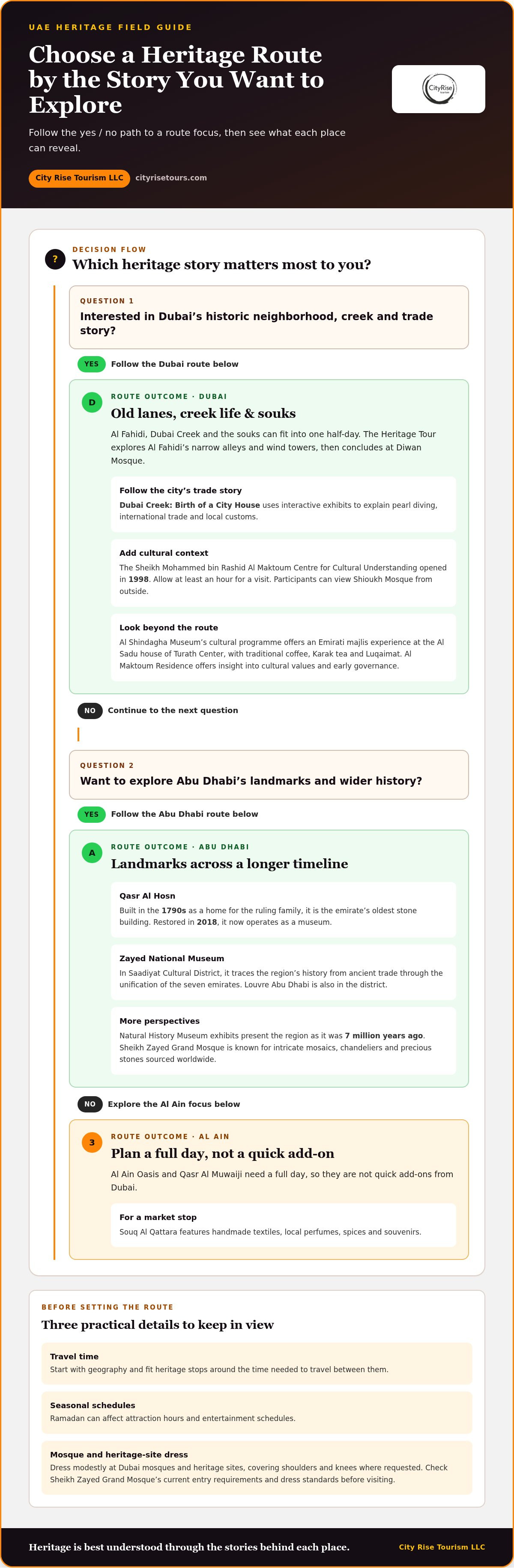
Yes, heritage-focused tours can include souks and historic sites. For a home-style setting, the Al Shindagha Museum programme offers an Emirati majlis experience at the Al Sadu house of Turath Center, with traditional coffee, Karak tea and Luqaimat.
In Dubai, the Sheikh Mohammed bin Rashid Al Maktoum Centre for Cultural Understanding opened in 1998. Its Heritage Tour explores Al Fahidi Historical Neighborhood’s narrow alleys and wind towers, then concludes at Diwan Mosque. The Al Shindagha Museum adds context through its cultural programme. Allow at least an hour for a visit, and note that participants can view Shioukh Mosque from outside.
Nearby, Dubai Creek: Birth of a City House uses interactive exhibits to explain pearl diving, international trade and local customs. The Al Maktoum Residence, formerly home to the Al Maktoum family, offers insight into Emirati cultural values and early governance. For a market stop, Souq Al Qattara in Al Ain features handmade textiles, local perfumes, spices and souvenirs.
Abu Dhabi’s landmarks tell a different part of the heritage story. Qasr Al Hosn, built in the 1790s as a home for the ruling family, is the emirate’s oldest stone building. Restored in 2018, it now operates as a museum. Zayed National Museum, in Saadiyat Cultural District, traces the region’s history from ancient trade through the unification of the seven emirates. Louvre Abu Dhabi is also located in the district.
To broaden the historical timeline, Abu Dhabi’s Natural History Museum presents exhibits about the region as it was 7 million years ago. Sheikh Zayed Grand Mosque is known for intricate mosaics, chandeliers and precious stones sourced worldwide. Dress modestly at Dubai mosques and heritage sites, covering shoulders and knees where requested. Before visiting Sheikh Zayed Grand Mosque, check its current entry requirements and dress standards.
Cultural itinerary planning and seasonal advice
Start with geography, then fit heritage stops around travel time. In Dubai, Al Fahidi, Dubai Creek and the souks can fit into one half-day. Al Ain Oasis and Qasr Al Muwaiji need a full day, so they are not quick add-ons from Dubai. During Ramadan, opening hours and entertainment schedules at UAE cultural attractions may differ.
Private tours generally allow more flexibility with pace and stops, while group tours follow a shared itinerary. Choose based on whether your priority is tailoring the day or sharing a set route with other visitors. For example, a Dubai heritage visit may focus on Al Fahidi and the creek, while an Al Ain itinerary needs more time for travel.
Cultural tour prices depend on the itinerary and are provided after a quote request. The stops, transport arrangements, duration and group format all shape the cost.
For mosque and heritage-site visits, dress modestly, covering shoulders and knees where requested. Before travelling to Sheikh Zayed Grand Mosque, review its current entry requirements and dress standards. For photography and accessibility, follow site directions and consider walking distances, surface conditions and your group’s needs when choosing stops.
To plan an authentic experience, choose a route with named heritage sites and activities that match your interests. Then arrange the stops around travel time and seasonal schedules. A Dubai City Tour or Abu Dhabi city tour can help structure a city-focused day; an Al Ain visit calls for a separate full-day plan.
Families can select activities suited to different ages and interests; Emirati Experiences range from workshops to long treks and must be open to all skill levels, ages and interests. Tour language depends on the guide and tour format, so choose an experience whose explanations your group can follow comfortably.
City Rise Tourism: Activities across UAE
City Rise Tourism helps travelers connect heritage interests with activities across the UAE. If you’re shaping a Dubai-focused visit, its Discover Dubai Attractions offering can help you explore options that fit your plans. For a broader itinerary, UAE activities and customized tour packages can bring different destinations and experiences together.
This is a useful next step when you’ve chosen the places and traditions you want to explore but need help organizing the trip. City Rise Tourism also offers International Holiday packages and B2B Travel Services, serving travelers and professional travel partners with different planning needs.
To explore UAE activities and plan your next step, visit cityrisetours.com.
Make Your UAE Journey Personal
Let your interests shape the pace and character of your next trip. Choose the traditions you want to understand, then leave room for unplanned discoveries along the way. UAE cultural immersion tours can feel more meaningful when you treat each stop as part of a larger journey, not a checklist of attractions.
City Rise Tourism offers Activities across UAE, International Holiday packages and B2B Travel Services. These options support different travel needs, from planning local experiences to arranging international holidays or professional travel partnerships. Start with the experience that matters most to you, then build the rest of your plans around it.
When you’re ready to explore your options, connect with City Rise Tourism and take the next step at your own pace.
Your next UAE experience can begin with one thoughtful choice. Enjoy planning a journey that feels like yours.
Frequently Asked Questions
What cultural immersion tours are available in the UAE?
Options range from heritage walks and museum visits to desert outings, food experiences and traditional demonstrations. Choose based on the context you want: a city route can focus on historic neighborhoods and trade, while a desert experience can bring cultural activities together with an outdoor setting. In Dubai, Abu Dhabi and Sharjah, compare the itinerary’s themes before deciding.
Which UAE cities and regions offer cultural tours?
Cultural experiences are available in Dubai, Abu Dhabi, Sharjah and Al Ain, with Al Wathba offering a distinct desert setting. In Dubai, you can start from Dubai Marina, Al Barsha, Downtown Dubai, JVC or Production City. Choose a route by destination, not just your accommodation area, and allow for travel between emirates or between Dubai and Al Ain.
What do UAE cultural immersion tours include?
Depending on the itinerary, a tour can combine guided interpretation, historic places, museum exhibits, food or cultural demonstrations. Before choosing, consider how the activities connect: a visit is more informative when the guide explains why a place or custom matters, rather than simply moving between stops. For example, ask whether the schedule balances indoor exhibits with outdoor visits and time for questions.
Which UAE cultural tours are best for Emirati food and dining?
Choose an experience that makes food a central part of the itinerary, rather than a brief meal stop. At Al Shindagha Museum, the programme includes a majlis experience with traditional coffee, Karak tea and Luqaimat. For a substantial traditional dish, look for a desert meal featuring Ghouzi, slow-cooked lamb served over spiced rice. These examples offer different ways to experience Emirati dining.
What should visitors wear and know about local etiquette on UAE cultural tours?
Wear clothing that follows each site’s guidance. Dubai mosques and heritage sites request modest dress, with shoulders and knees covered where required. For a respectful visit, follow posted instructions, listen to your guide and ask permission before photographing people. At Sheikh Zayed Grand Mosque, review current entry requirements and dress standards before travelling, as guidance can be specific to the site.


